





DISC vs. MBTI

How does DISC compare to MBTI? This is a common question many people have asked us over the years.
There are many different angles to consider, as both tools are used frequently in organizations, but in different ways. In this article, we will answer some of the most basic questions so that you can have a good understanding of how the two tools compare. The more you understand about what each one focuses on, the more informed you can be knowing which may be most appropriate for your needs.
What social sciences are they based on?
DISC is a human behavior model originally presented by Dr. William Marston in his 1928 book Emotions of Normal People. DISC measures four unique areas, that make up the DISC acronym.
- D (Dominance) measures problems and challenges.
- I (Interpersonal) relates to people and contacts.
- S (Steadiness) measures a person’s inclination toward pace and consistency.
- C (Compliance) measures procedures and compliance.
The MBTI tool was developed and formalised in the 1940s by researcher Isabel Briggs Myers and her mother, Katherine Briggs. This tool is based on the theory of psychological type introduced in the 1920s by Carl G. Jung. MBTI identifies four main areas.
- Favourite world asks whether you prefer to focus on the outer world or on your own inner world. This is called Extraversion (E) or Introversion (I)
- Information determines whether you prefer to focus on the basic information you take in or do you prefer to interpret and add meaning. This is called Sensing (S) or Intuition (N).
- Decisions looks for preferences to either first look at logic and consistency or to first look at the people and special circumstances. This is called Thinking (T) or Feeling (F).
- Structure deals with the outside world. For example, in dealing with the outside world, do you prefer to get things decided or do you prefer to stay open to new information and options? This is called Judging (J) or Perceiving (P).
What are the applications for both?
According to the Myers-Briggs’ website, the purpose of the Myers-Briggs Type Indicator® (MBTI®) personality inventory is to make the theory of psychological types described by C. G. Jung understandable and useful in people’s lives. This assessment identifies and describes 16 distinctive personality types that result from the interactions among a person’s preferences. It is a tool that investigates a categorical fit for an individual, then provides a construct to identify preferences in others.
A preference is simply what a particular person likes. While you may prefer chocolate over vanilla when it comes to ice cream, there may be times when you choose vanilla. On occasion, you may just have a taste for vanilla or the store may be out of chocolate. In general, you will prefer to choose chocolate a majority of the time. This is an example of a personal preference.
A personality type is based on someone’s preferences and consistent patterns. Does a person tend to focus more on the outside world or their inner world? A tendency toward one over the other would indicate a preference toward Extraversion or Introversion. There is no advantage or disadvantage to being on either side. Neither is wrong and a person can operate in both spheres, depending on the situation. They just happen to, for the most part, prefer one over the other.
DISC, on the other hand, has the main purpose of identifying behavioural styles. DISC is not a personality test. Understanding how a person acts makes it easy to identify predominant behaviours. Then, being able to adapt behaviours to fit into specific situations will help a person thrive in work and social situations.
DISC can be used to help a person grow, help develop as a member of a team or even be used to help select a candidate for a job. Regardless of the use, the main objective of DISC allows an individual to understand his or her specific behaviours.
TTI Success Insights’ DISC profile can also be used to create a benchmark for a position or job, which enables hiring managers to think about candidates in an way that removes personal biases. When used as part of the selection process, be sure an assessment is EEOC and OFCCP compliant for hiring. TTI Success Insights’ DISC is both EEOC and OFCCP compliant.
Characteristics of the Questionnaire & Reports
The length of questionnaire varies quite a bit with DISC typically having 24-30 questions while MBTI has up to 90.
MBTI sorts individuals into 16 types. TTI SI’s DISC assessment include 364+ unique profile combinations. DISC has a visual chart that enables a user to catch in a glimpse what behavioural type they are.
Very importantly, DISC reports contain instructions (including strengths, weaknesses, perceptions, and time wasters) for taking the tools beyond the assessment in order to apply them in real life. It’s not just about what it is but more so what to do with the information.
Conclusion
Both assessments have many beneficial attributes. It is critical that you think through the why you need to use these tools; in other words, what is the end game?
We believe that MBTI is a well respected tool. Many individuals were introduced to MBTI early on in their career for good reason. It is pervasive and easily understandable.
Both MBTI and DISC can help people within an organisation identify his or her best way to approach work, manage their time, problem solve, make decisions and manage stress.
Each assessment provides its own unique value. Once you figure out exactly what you want to measure and better understand, you can identify which assessment may work best for your purposes.
About the Author


Stop Blaming and Shaming to be Successful
Is your Team and bottom line suffering as a result of your lack of Personal Accountability?
Personal Accountability is the key ingredient. If we want to be a leader of character, we must embrace this competency. We must quit making excuses, re-establish our integrity and like Harry S. Truman place a sign on our desk that says ‘Let the “Buck Stop Here.’
We show you how to get Personally Accountable and back on track to Leadership success.

Stop doing this immediately if you want to be a successful leader
As a leader and in your companies this Growth mindset translates to being comfortable with feedback, accepting and admitting failure, collaborating rather than competing and learning from your mistakes. We see your Growth Mindset as an essential part of the Competency Continuous Learning. If you’re not quite there yet, we will show you how.

The Painful Hidden Cost of Conflict and how to escape it
The tangible things that impact the bottom line are what we focus on. A drop in Sales, a ineffective Product, we have hard data to hand and we move into action. What do we do when it’s difficult to quantify, such as understanding how much conflict actually costs us? Let’s find out and face this corrosive and costly issue head on…
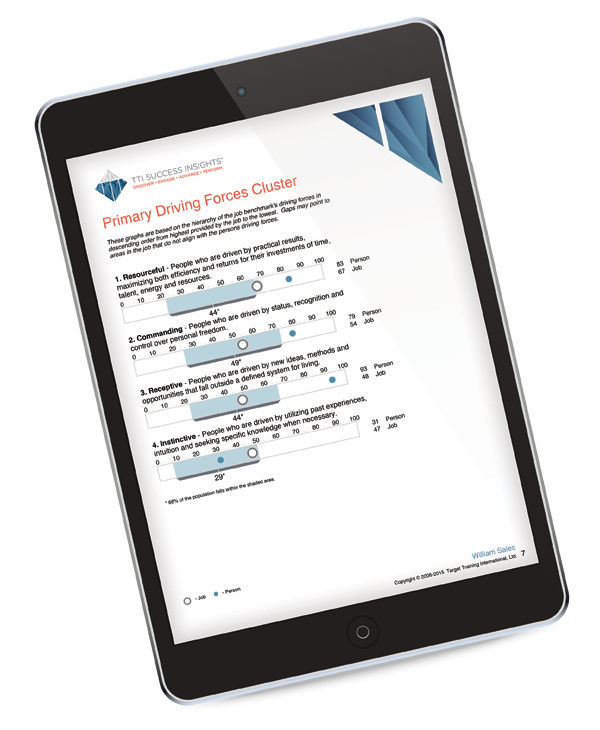
FREE DISC Assessment: Find out what your behaviours really are!
Have you ever taken a DISC Assessment? Actually… Have you ever taken a TTI DISC Assessment? Well why wait any longer, lets find out why you really behave the way you do!